When shoppers only spend seconds scanning packages on the shelf, every square centimeter counts. Front-of-pack symbols occupy only a fraction of package real estate, yet they can have an outsized influence on what consumers notice, trust, and ultimately purchase. Brands must compete for limited budgets, navigate regulatory requirements, and deal with tariff-driven hurdles— which means understanding how multiple packaging symbols interact has become a critical challenge.
A Numerator Verified Voices® study found that visibility varies by symbol, and while symbols can attract attention, their effectiveness depends heavily on the combination in which they appear. For brands balancing package design with required information, the lesson is to test each message in context and prioritize symbols based on how each may impact consumer behaviour.
Conducted in September 2026, the study employed monadic concept testing to examine three symbols— a health warning, a tariff-related “T,” and a Made-in-Canada symbol— measuring how consumers noticed the individual symbols on conceptual granola bar packaging and assessing purchase intent when the symbols appeared in distinct combinations. With Monadic concept testing, respondents evaluate a concept in isolation, helping reveal its true strengths and weaknesses. This approach reduces bias by removing the competitive and contextual effects that can arise when multiple ideas are evaluated together.
Visibility starts with the symbol
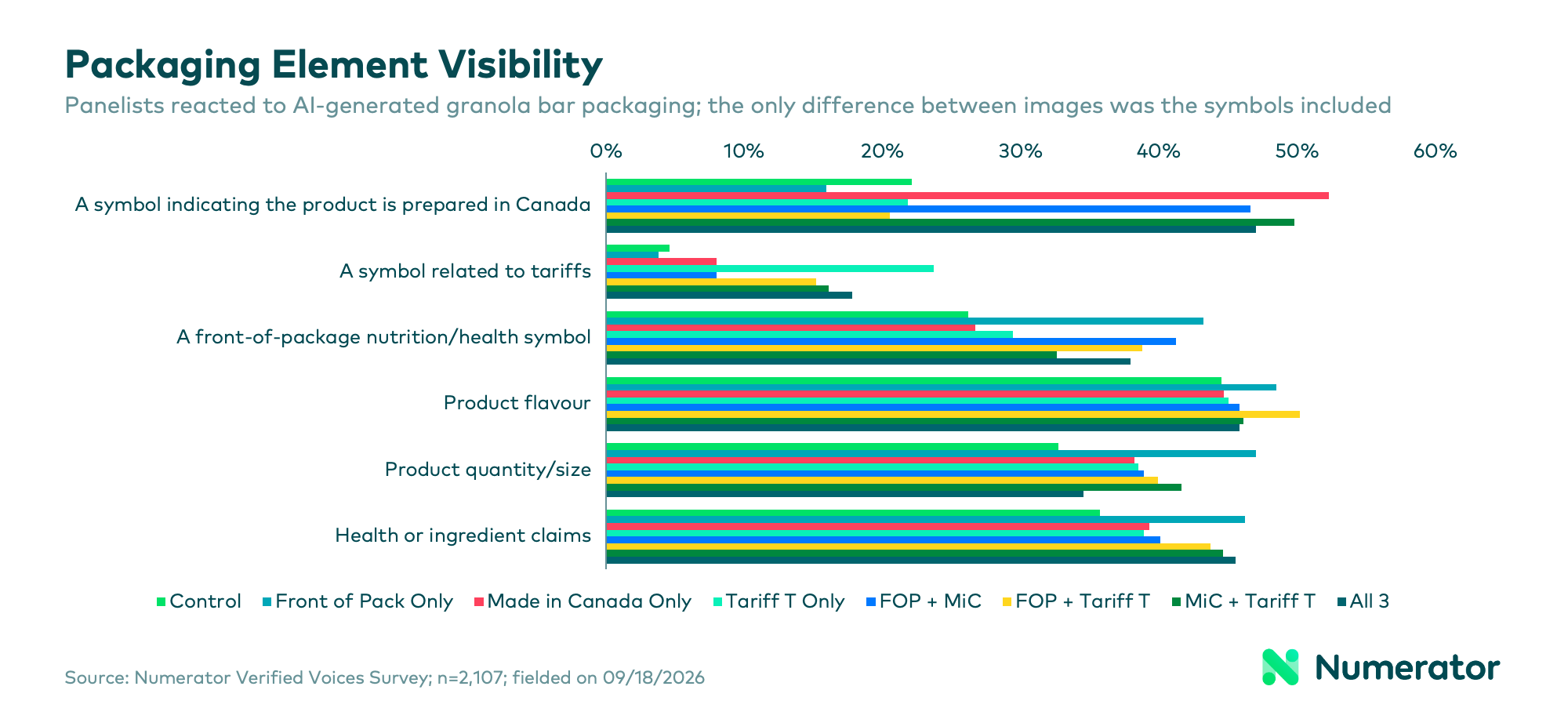
Consumers were most likely to notice the Made-in-Canada symbol: 52.5% of consumers observed it on the packaging. The health symbol followed at 43.2%, and the fewest number (23.6%) of consumers noticed the tariff “T.” Not all symbols appear to be created equal— one symbol can occupy the same package real estate as another and still be less likely to register with consumers.
The combination of symbols matters
Brands are dealing with more regulatory challenges, and in some instances, health symbols are required on packaging. Leveraging our methodology, we can understand the benefits and considerations of multiple symbols on a package design.
Our research evaluated purchase intent with multiple symbols versus a control group, yielding the following:
- The combination of the health warning and Made-in-Canada symbol resulted in a 1% decline in purchase intent— mitigated from a 24% decline when the front-of-pack health warning was on the packaging alone.
- The health warning and tariff “T” symbol decreased purchase intent by 10%.
- The combination of the Made-in-Canada and tariff symbols caused no change in purchase intent.
- When included on a package together, the three symbols led to a 9% decrease in purchase intent.
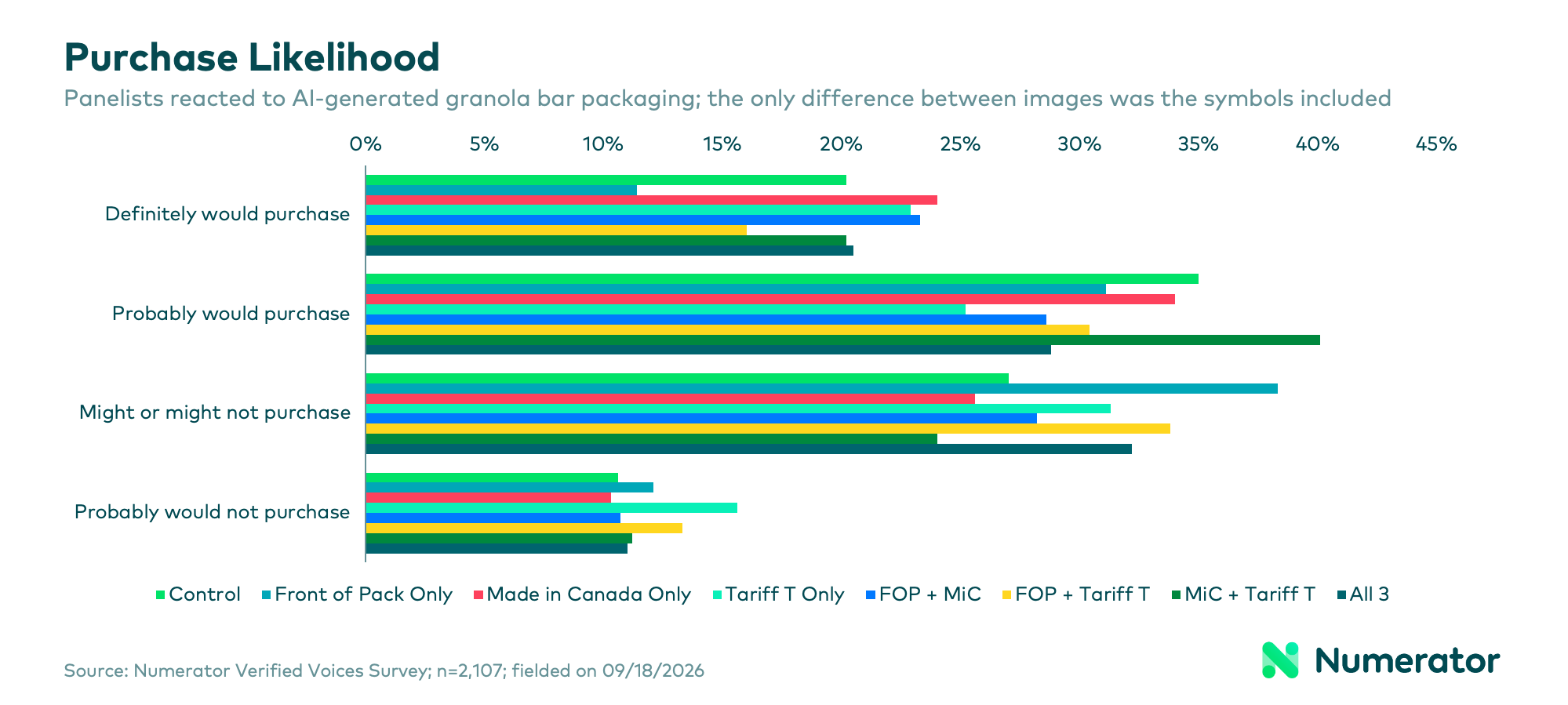
More symbols can lower purchase intent, but the right combination can help. When a front-of-pack health warning is required, a Made-in-Canada symbol can help offset some of its negative impact.
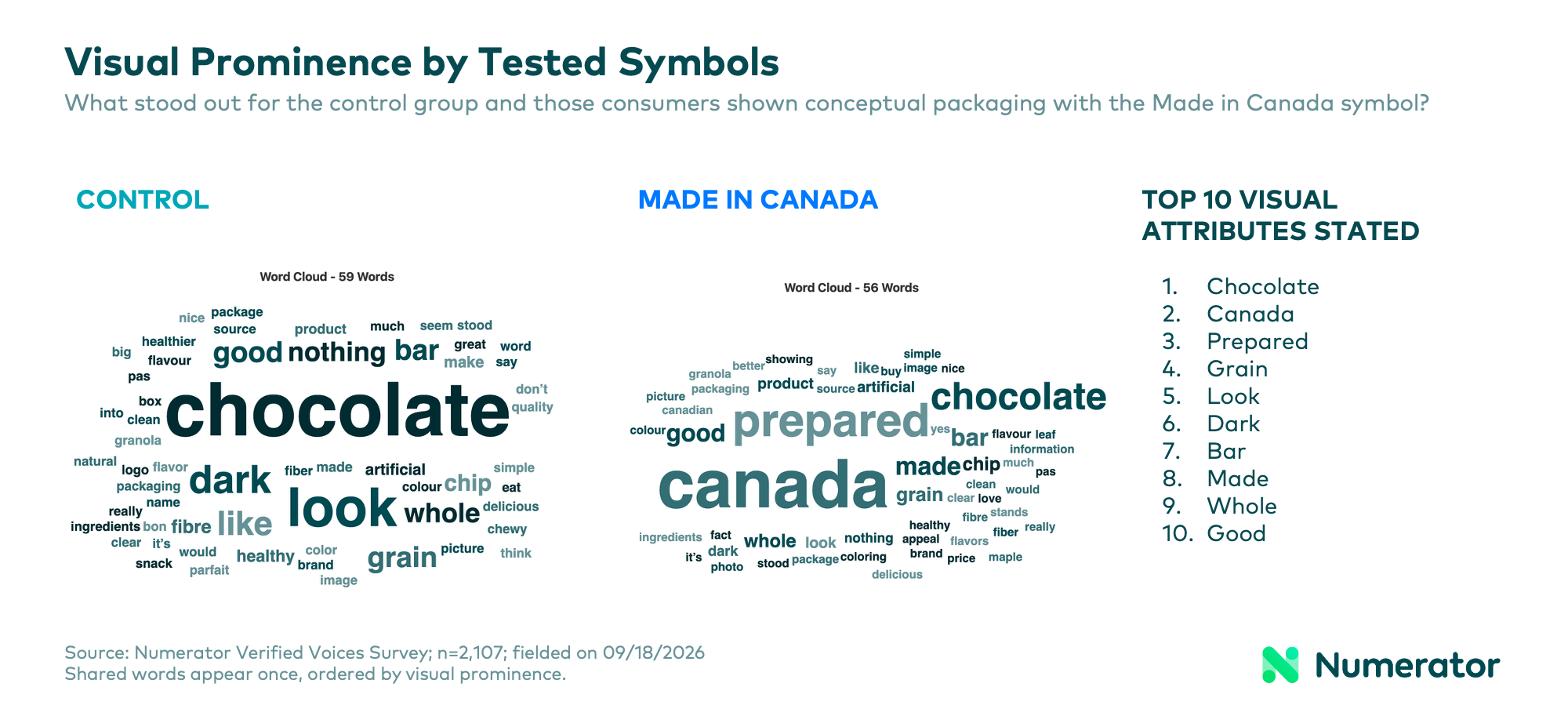
Numerator research validated that certain symbols resonated more strongly with Canadian consumers. When asked what stood out most on the packaging, panelists who saw the Made-in-Canada symbol were more likely to indicate that the symbol had a meaningful impact, and those consumers still noticed the same major attributes as the control group, such as ‘chocolate’, ‘prepared’, and ‘grain.’
The best packaging design is based on consumer understanding
The battle for consumer attention and dollars is an ongoing challenge in today’s macroeconomic environment. How can Canadian brands best adjust packaging design, content, or messaging to win with consumers? Start by understanding the consumer decision hierarchy of your verified buyers and how packaging symbols, icons, or badges may impact decision-making.
Numerator can help. Numerator Verified Voices® is fully integrated with our high-quality panel data, giving you direct access to the right target audiences— including your consumers and your competitors’ consumers— alongside fast, intuitive survey templates, trusted methodologies, and, if needed, guidance from our expert research consulting team.